



In my experience, pastors tend to meet AI in one of two ways. Some embrace it because it’s new and shiny, almost as if it came pre-sanctified. Others reject it for much the same reason. It’s new, so it must be dangerous.
Those look like opposite positions. I think they usually come from the same place. We’re reacting. We move on instinct, and we’re more motivated by what could happen than most of us like to admit.
Ministry didn’t invent this. It goes back to the garden. When God called to Adam, Adam answered that he heard God in the garden, was afraid, and hid (Genesis 3:10). Fear has a way of creeping into nearly every corner of our lives. Technology is one more corner.
Paul writes that “everything that does not come from faith is sin” (Romans 14:23, NIV). He was addressing believers who ate food their conscience wasn’t settled about, and his point was to act from conviction instead of doubt. I think the principle carries over. A pastor who adopts a tool out of excitement, or refuses it out of alarm, hasn’t really decided anything. He has reacted. A better stance starts with knowing what you believe and making your decisions from there.
Anchor it before you ask
I’m an evangelical pastor from a Wesleyan Holiness and Pentecostal background. I hold theological and doctrinal convictions that aren’t up for negotiation. If I don’t tell an AI tool about them, it will often widen the foundation to include views from other traditions, some of which conflict with mine. The tool is drawing on everything it has read, and much of that was written by people who don’t share my convictions.
Think about asking a librarian for a book on a sensitive subject. You may be handed a hundred titles, and only a handful will fit your convictions. The librarian did the job you asked for. You just never said what you were looking for.

AI works much the same way. Ask a general question about the gifts of the Spirit without saying where you stand, and you may get a cessationist answer presented as the default view. You may also get several traditions blended into something none of them would recognize. So tell the tool first. You might write, “I’m a Wesleyan Holiness pastor in the Pentecostal tradition. Answer from within that tradition, and label any view another tradition would hold.” The answer comes back different.
This is the Context step in CARE, the prompting framework we use here. For theological work, it’s where most of the difference gets made.
Then check what comes back
Anchoring cuts down on drift. It doesn’t end it. No tool I know of will stay inside your convictions every time, however clearly you state them. So the answer still gets checked, and we use READ for that.
Review. Did it answer the question you asked, from the position you asked it to take?
Examine. Which claims carry the most weight? In theological work, look hard at the assumptions underneath. Did a view from another tradition slip in without a label?
Authenticate. Look up every Scripture reference in your own Bible and read it in context. Track any quote to its original source. If the tool names a book or an author, confirm the book exists and says what the tool claims.
Decide. Keep what holds up and revise or set aside the rest. Asking the same tool whether it’s sure doesn’t count as checking.
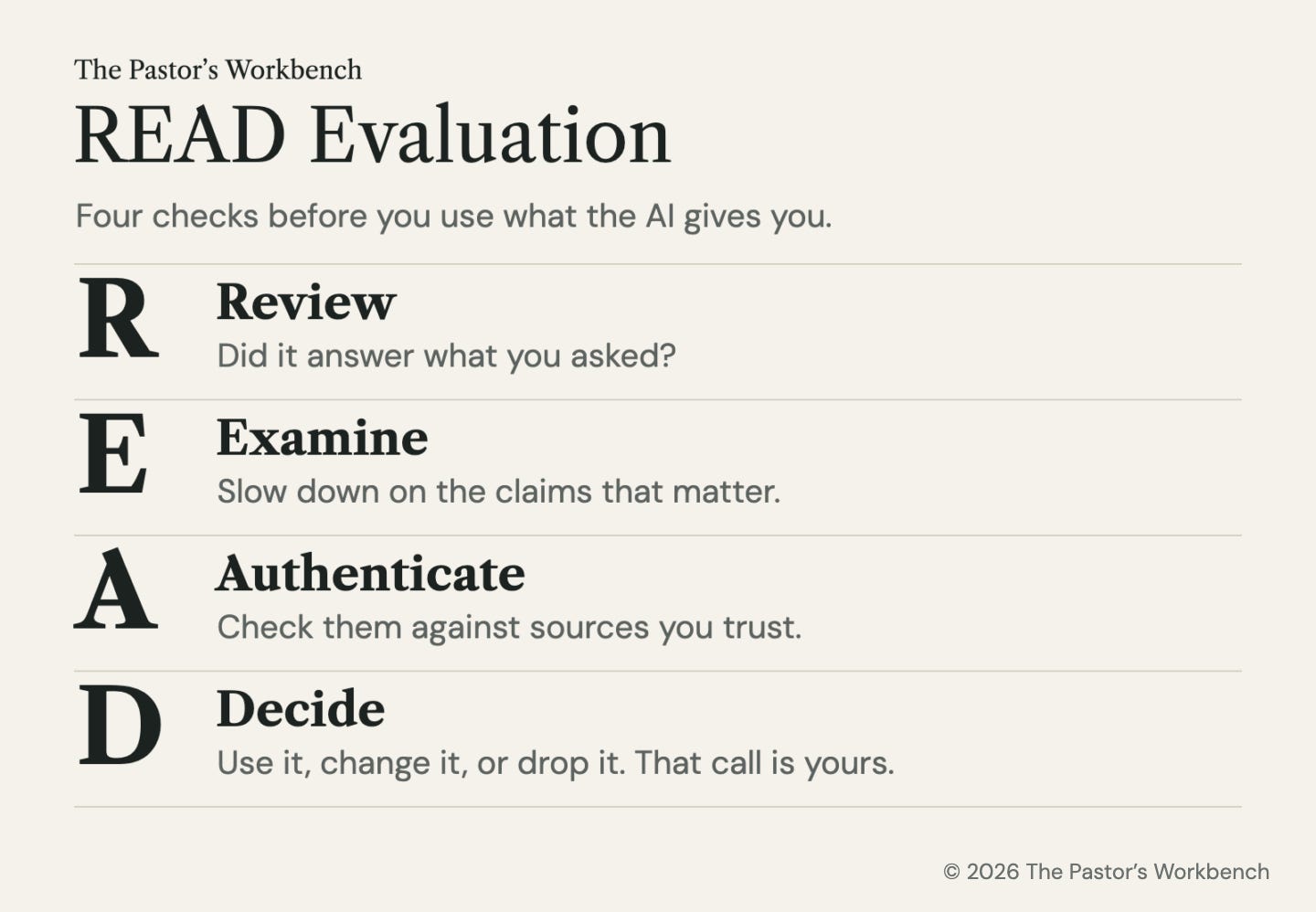
This takes a few minutes, and it keeps AI in the assistant’s chair. While your theology stays your responsibility.
Try it this week
Write a short paragraph describing your tradition and the convictions you won’t move on. Keep it plain, and save it somewhere you can paste it from.
Then take one low-stakes question, maybe background for a Bible study, and ask it twice, once without your paragraph and once with it. Compare the answers. Run READ on the better one before you use any of it. That one comparison will show you a lot about how these tools behave.
The free Pastor’s Workbench community has a one-page READ Evaluation Card in READ Evaluation, under 01 Start Here. Join the free community and start there. If you’d like a fuller, reusable version of that paragraph, the Premium Anchored AI system walks you through building one.